
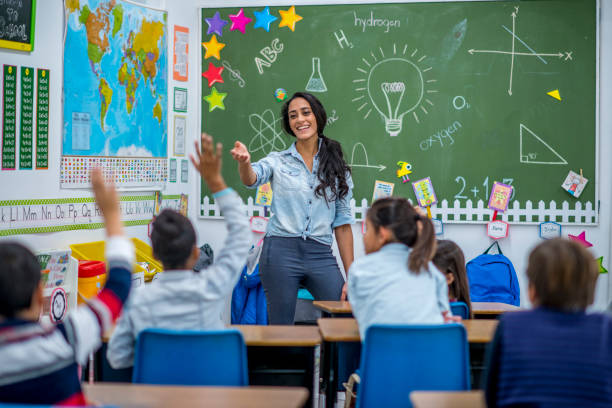
Teachers can fine-tune their classroom management practices at the beginning of each school year to maximize the effectiveness of their teaching. This is especially relevant in today’s context where teachers are facing difficulties. For example:
The survey of schools in 2024 from the National Center for Education Statistics (NCES) found that 75 percent of public schools indicated that inattention or poor focus negatively affected students’ learning in some way, either moderately or severely.
A 2023 survey of teachers conducted by the Pew Research Center found that 49% of teachers rated the behavior of most of their students as being poor or fair.
Online education provider Study.com released a 2024 teacher retention survey that revealed that 54% of teachers found classroom management and students’ behavior to be a major difficulty in their profession.
Classroom management is an important part of success in our education system. Teachers can learn about a specific classroom management strategy that can make the classroom experience a satisfying one for their students and for themselves.
Defining Classroom Management
It is important to first understand the importance of classroom management in the educational context before discussing some examples of classroom management strategies.
Classroom management practices involve all the tools and skills a teacher uses to create a positive and harmonious classroom that is conducive to learning. This type of environment helps teachers ensure that students feel safe, feel respected, and can be motivated to learn.
A recent 2024 study about the relationship between classroom management and the achievement of students identified some specific goals of classroom management, including:
- Student Behaviour Management, both positive and negative.
- Good communication between teachers and student is established.
- Taking steps to ensure that teacher(s) are flexible to meet students’ needs;
- Building positive teacher/student relationships
Building a caring community in the classroom is an important part of good classroom management. This may include setting up classroom procedures and routines, fostering students’ kindness, and incorporating ideas that students are interested in, etc.
To sum up: Classroom management is about deliberately setting up an environment that provides the most conducive conditions for learning, and that promotes students’ respectful involvement in the learning process.
7 Strategies for Teachers to Use in the Classroom
Teachers can choose from a number of specific classroom management strategies to promote learning. Here are a few examples of these strategies, along with examples of the many techniques available to teachers.
Set Clear Expectations
Set clear expectations to communicate to students what is expected of them and provide a consistent learning environment. Students’ understanding of their teacher’s expectations can enable them to manage their own behaviour, and to share some responsibility for their learning.
These resources provide ideas on how to set clear expectations:
Educator organization We Are Teachers has created a set of 10 classroom expectations that teachers can use in any classroom. The expectations include preparing to learn in class, active participation in class and learning from error.
The Prodigy educational game maker has a list of classroom rules to outline the expectations that are set, including ways that students can ask questions, when students must sit in their seats, and ways that students can contribute to discussions.
Teachers should communicate to students about the positive and negative outcomes for meeting or not meeting expectations in educational software, PowerSchool says.
Early childhood education organization Good2Know Network encourages teachers to consider allowing students to be involved in creating the expectations for their classroom. This can facilitate students’ feeling of inclusion and hence their involvement in the way the classroom is managed.
Educator preparation organization TExEStest.org recommends that teachers make time to discuss with their students how to meet expectations. For instance, if students are taught the expected behavior, they will have a clear idea of what good behaviour is.
Novak Education suggests teachers develop presentations about their expectations, allowing students to discuss their expectations in their classroom.
Use Instructional Approaches That Promote Students’ Engagement
Another key classroom management tool is the use of classroom engagement strategies that create learning. For example:
Descriptions of 25 useful strategies in teaching that can help teachers develop engaging classrooms can be found at Schools That Lead, an education firm.
SchoolAI, a company of AI with a mission to schools and learning experiences, recommends that teachers change their teaching methods to retain students in learning. For example, teachers might want to try a combination of activities, visuals, and classroom discussions.
Defuse, a conflict resolution and training organization, advises teachers to incorporate students into the classroom process, such as role-playing, simulations and group work.
Accelerate Learning, a company focused on science, technology, engineering and mathematics (STEM) learning services, challenges science teachers to keep students motivated by using student-centered approaches that foster students’ interaction, inquiry, and hands-on experiences with science concepts.
Continuing education firm Teaching Channel emphasizes the importance of making connections to the real world when teaching lessons. Showing students how what they are learning affects them, the things that interest them, and their goals can be a good way to keep students engaged in learning.
Use Effective Disciplinary Techniques
Specific classroom management practices related to discipline which are effective are those that teach students to adjust their behavior to make it better and to accept responsibility for their own behavior. For example:
There are 25 discipline strategies teachers should consider, such as practicing proximity control (physically move closer to students who are behaving poorly), giving students a classroom job to keep them accountable, and showing students what you expect them to do during class.
According to educational training company Responsive Classroom, teachers should apply logical consequences instead of punishment when they have students’ behavior problems. Consequences may be a loss of privileges or a move of the student to a calming area while he or she learns to control him or herself.
Education reference website ThoughtCo. offers a guide for when teachers should send students to the principal’s office for disciplinary reasons. The guide explains the difference between minor and major academic discipline problems: those that can be dealt with by the classroom teacher and those that must be taken to the principal.
The concept of discipline is shown in teacher guidance which is available at the website of teacher resources, namely the website of Teacher Institute. This can entail implementing restorative practices that enable students to repair the damage that their behavior has caused or showing students how to manage their emotions to reduce their outbursts or conflicts in the classroom.
The U.S. Department of Education’s advice for creating classrooms that are safe, inclusive, supportive, and fair stresses the use of disciplinary techniques that treat students with respect and dignity.
Apply Classroom Layouts That Facilitate for Successful Classroom Management
The layout of a classroom can contribute to the control of students’ behavior. An appropriate layout can encourage students to be involved in learning, to be interested in the content of teaching and training, and to show better academic performance. For example:
Classroom designs with flexible seating, paired designs with two desks arranged together, or circle designs are described in educator resources website TeachHUB as beneficial.
TPT (Teachers Pay Teachers) is a website for resources for teachers that shares the advantages and disadvantages of each of 8 different classroom seating options, and the impact these options can have on student engagement.
Open Educational Resources (OER) provides an online classroom arrangement project with videos about the value of alternative classroom arrangements.
Teacher resource site, “Chalk & Apples” offers ideas for setting up the classroom, including making zones for different activities, making the classroom welcoming and posting learning goals for students.
School furniture and equipment company Demco shares some ideas to make classrooms flexible, potentially in a way that will benefit students’ ability to engage and learn.
Consider Using Classroom Management Technology
There are other technologies that are appropriate for lessons that can also be a way to manage the classroom. Today’s student lives in a technologically saturated world and it’s important for the teacher to recognize this and integrate technology into the classroom. For example:
EducationCorner.com, a website for educators, compiled a list of 35 of the best education apps that there are for teachers, including a number of apps specifically designed for classroom management.
Nonprofit organization Common Sense Media offers advice to teachers on incorporating technology into the classroom, teaching students how to be good digital citizens, and using technology to promote students’ engagement.
Developed by educational technology company Lightspeed Systems, classroom management software aids teachers in managing their classrooms, allowing them to devote more time to teaching and less time to administrative duties.
This educational technology-focused organization provides information about classroom technology such as applications to monitor student’s behaviors and software that allows educators to communicate with students’ families/caregivers about students’ behaviors.
Managed Methods is a tech company developing technology for cybersecurity and student safety in schools and provides teachers with some tips regarding classroom management in online settings. For instance, teachers could install specialised software and keep an eye on students’ use of the device, checking if they are studying or not. Additionally, online classroom teachers may be able to restrict students’ access to distracting or inappropriate websites by using software.
Work cooperatively with other teachers and seek out a mentor.
One way teachers can learn about classroom management tips is to learn from other teachers. Teachers can share and learn strategies for managing the classroom either formally or informally with other teachers, or with an experienced teacher who is willing to mentor them. For example:
IRIS Connect, a professional development firm, offers a variety of strategies for teachers to share their ideas. For example, teachers with a good leadership ability could be the leaders of teaching collaboration and mentoring activities, through which teachers can exchange ideas on how to solve classroom management problems.
The suggestions below for implementing teacher collaboration in early childhood education are from a professional development provider, FirstDay Learning. For instance, teachers can share their experiences about what they have learned from their own successful practices as teachers and what they have learned about how to improve their teaching. Schools may also provide social activities or team building activities where teachers can build trust and work together to devise positive classroom management practices.
For teachers looking for mentors, Challenger Center, a nonprofit STEM education center, has some ideas. For example, teachers should reflect on their reasons for participating in mentoring and examine their professional networks to identify a mentor who is interested in the field in which they wish to have a mentor.
The National Association of Elementary School Principals has some resources to support mentoring of early-career teachers. For instance, novice teachers require mentoring to obtain guidance on teaching methods and in designing learning activities that will sustain students’ interest.
The Alabama Department of Education handbook for its Teacher Mentor Program provides a mentor/mentee dialogue tool which can be used to guide teacher mentor relationships and to ensure that these relationships are focused on discussions of important classroom management strategies including how to keep students engaged and communicating teachers’ expectations for students’ behaviors.
Keep Up to Date on Research Regarding Classroom Management
Teachers who are seeking a Master of Arts in Teaching, or an advanced degree such as a Masters of Education, may find it useful to keep an eye on recent studies on classroom management techniques, all the while teachers who just want to enhance their students’ experience can as well. Some recent research studies are:
The Analysis of Classroom Management Challenges Faced by Teachers in Online Classrooms, TechTrends. This research (2025) revealed the most frequently occurring classroom management issues in online classrooms and provided recommendations to overcome these issues.
Integrating AI in Classroom Management: Improving Educational Efficiency and Teacher Workflows.” Journal of Information Systems Engineering and Management. This 2025 study identified ways teachers can leverage AI tools to improve their classroom management practices.
Update: Applications of Research in Music Education, “Classroom Management in K–12 Classroom Music: A Review of the Literature”. This study of 2023 was conducted regarding the unique challenges of classroom management in music education and identified specific techniques of classroom management that can be used to alleviate some of these challenges.
A systematic review of the relationship between teachers’ everyday classroom management and anxiety in primary school children was conducted in Review of Education. In this 2023 research, the researchers found out the impact of classroom administration strategies on anxiousness of the students.
On the other hand, “Is Teacher Humor an Asset in Classroom Management?” was published in Current Psychology.However, Current Psychology published “Is Teacher Humor an Asset in Classroom Management?” Investigating its relationship with students’ well-being, sense of school belonging and engagement.” The aim of the present study, conducted in 2023, was to examine the role of different teacher’s humor types in students’ involvement, belonging, and wellbeing.
Behavioral Disorders, “Using Performance Feedback With and Without Goal Setting on Teachers’ Classroom Management Skills.”. This study from 2023 focused on providing teachers with feedback about their own efforts to engage students who experience emotional/behavioral disorders, and found that performance feedback was beneficial to helping teachers raise their students’ level of engagement.
Classroom Management, American Psychological Association. This video series, based on psychological science and research, was created to help teachers decrease disruptions in their classrooms and improve students’ engagement.
Effective Classroom Management can enhance the Educational Process of both the Student and Teacher
With effective classroom management strategies, teachers can maximize student learning and increase the satisfaction of teaching.
Teachers can employ various approaches to classroom management that can help them overcome challenges they face such as setting expectations, trying different classroom configurations, and experimenting with different teaching methods. By purposeful classroom management efforts, success in school can be an objective.